The Other Front Door: Saturday Mornings at Stretton’s Bacon Buttie Hatch
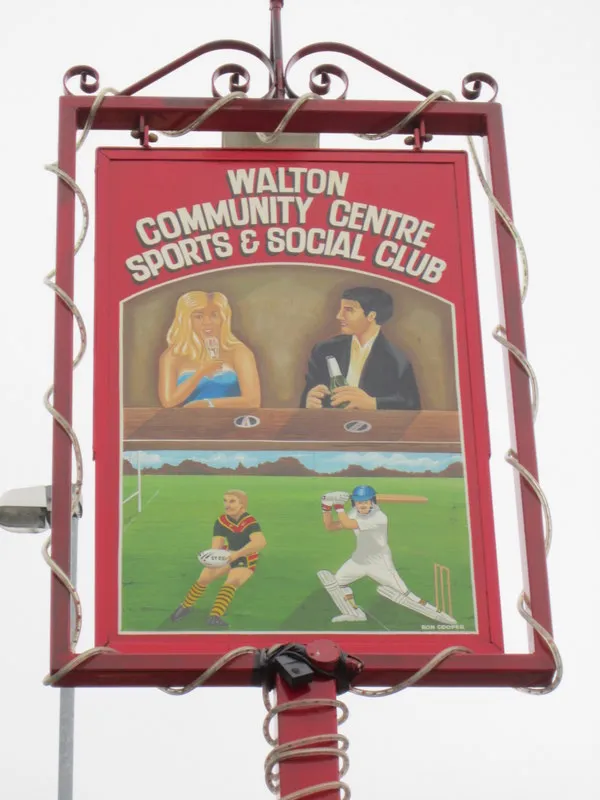
Photo: Ian S , CC BY-SA 2.0, via Wikimedia Commons
At 7:42 on a Saturday morning, Stretton Social Club is already awake. Not in the way it is awake at 9pm on a Friday, with the speakers warming up and the car park filling, but in a quieter, more practical way. The lights are on in the kitchen. The urn is making that low, patient rumble. A tray of bacon is already under the grill, and someone is trying to remember where the brown sauce lives.
The hatch is open.
For anyone who only knows the club after dark, this is a different building. The main room feels larger in daylight, almost honest. Chairs are still stacked in one corner. The stage is bare except for a coil of cables. The bar is shut, the pumps are silent, and the noticeboard by the door is easier to read without a queue of people in front of it. But the kitchen hatch is doing a steady trade, and the queue forming beside it has its own rhythm.
A Room With the Lights Turned Up
Saturday morning at the club is not an event, exactly. There is no start time printed on a poster. Nobody has been asked to share it on social media. It happens because people know it happens: the hatch opens, the kettle boils, and for a couple of hours the club becomes a useful place to be.
Dog walkers arrive first, leads wrapped around wrists, one eye on the door and one on the specials board. Then come the shift workers — the ones finishing a night shift, the ones starting a late one, the ones who have worked out that a bacon buttie eaten standing up is a better bridge between the two than anything waiting at home. Grandparents turn up with grandchildren in tow, ordering smaller portions and extra napkins. A musician from the night before may drift in, hood up, carrying a gig bag and the expression of someone who has slept in a van or on a sofa and is not quite ready to discuss it.
Nobody asks why anybody is there. That is part of the appeal.
The Queue Has Its Own Weather
The queue is short but never quite empty. It moves slowly because people talk. Not in the formal, hand-shaking way of a club committee meeting, but in the half-finished sentences of people who are still waking up. Did you see the game? Is the path still flooded? Are you on the early again? The hatch window becomes a small counter of local information, run by whoever is nearest the front.
There is a particular sound to it: the clink of coins, the scrape of a spatula, the tear of a paper bag, the soft complaint of a dog tied to the leg of a chair outside. Instant coffee is poured into thick mugs. Tea is made strong enough to stand a spoon in. Bacon butties are wrapped in paper and handed over with a warning about the sauce.
It is not glamorous. It is not meant to be. But it is specific, and specific things are often the ones people remember.
Why the Morning Crowd Rarely Meets the Night Crowd
The club has two audiences, and they do not overlap as much as you might think. The Friday night crowd wants music, noise, a reason to stay out. The Saturday morning crowd wants a seat, a hot drink and a reason to be home before lunch. Some people belong to both, but many do not.
That is not a problem. It is the point. A social club that only works after 7pm is only serving half its neighbourhood. The morning hatch catches the people who would never come out after dark in November — not because they are unsociable, but because the dark, the cold and the walk home all add up. A Saturday morning is easier. The street is light. The buses are running. There is less pressure to stay, and less pressure to explain why you are leaving early.
For those people, the hatch is not a side door. It is the front door.
The Hatch as a Soft Entrance
Walking into a club for the first time can be hard. Even a friendly room can feel like a room where everyone already knows where to sit. The morning hatch lowers that bar. You do not have to buy a pint. You do not have to know the quiz format or the names of the bar staff. You can order a bacon buttie, stand near the radiator and be gone in ten minutes.
That low-stakes visit matters. It turns the building from a place you walk past into a place you have been inside. The next time there is a notice about a coffee morning, a quiz or a live band, it is not an invitation from strangers. It is an invitation from the room where you once ate a slightly too-hot sausage roll and read the paper in peace.
What a Bacon Buttie Actually Does
On paper, the hatch sells breakfast. In practice, it does something more useful. It gives the club a daytime purpose. It gives volunteers a reason to open up early. It gives people who live alone a place to hear another voice before the day properly starts. It gives parents and grandparents a cheap outing that does not require booking a table or finding a car park.
And it gives the club a second life. The same room that hosts music and quizzes on a Friday is, on a Saturday, a place for quiet conversation and ketchup sachets. Nothing has been rebranded. Nothing has been overthought. The hatch is simply open, and people come.
The Case for Before Noon
By 10:30, the queue has thinned. The urn is still warm. Someone is wiping down the counter. A dog is asleep under a chair. The club will close up soon and return to its evening self, but the morning has done its job. It has reminded the neighbourhood that the building is not just for big nights. It is for ordinary ones too.
So if you have only ever seen Stretton Social Club with the lights down and the music up, try it with the lights on. Come in before noon. Order something simple. Sit for a minute. You may find that the quietest hour is the one that makes the club feel most like yours.