One Mitten, a Pair of Specs and a Pencilled Raffle Ticket: The Quiet Story of Stretton's Lost Property Table
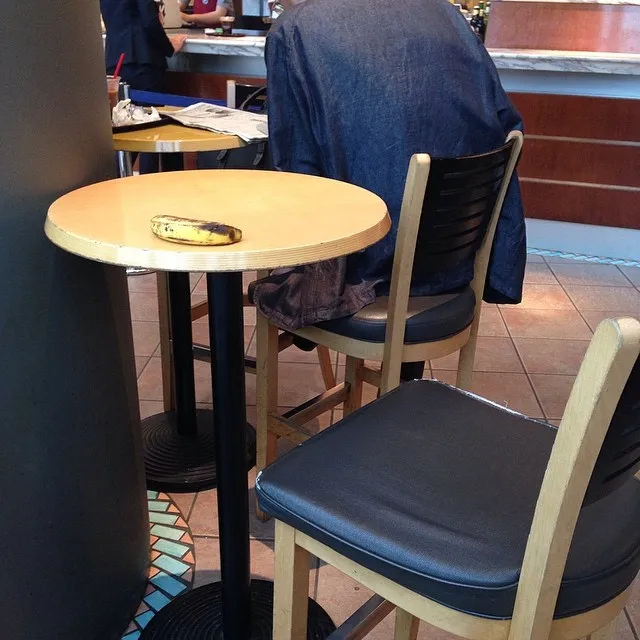
Photo: monoprixgourmet, CC BY 2.0, via Wikimedia Commons
There is a table by the stage at Stretton Social Club that never gets top billing. It does not have a microphone. It does not sell tickets. On most nights you would walk past it without noticing. But on a Monday afternoon, once the weekend has been swept up and the chairs are back in their rows, that table becomes one of the most quietly revealing spots in the building.
This is where the lost property box is emptied. Not tipped out in a heap, not shoved into a carrier bag and forgotten behind the bar, but laid out with a certain care. A child's red mitten, thumb worn thin. A pair of reading glasses in a soft case. A single earring. A paperback with a folded bus ticket marking page forty-two. And, more often than you might expect, a raffle ticket with a name pencilled on the back.
It is a small exhibition of Stretton's weekends. And like most things at the club, it is run by a volunteer who insists she is not doing anything special.
The box that remembers the weekend
Pauline has looked after the lost property box for longer than she can neatly date. She arrives early on Monday, sets the table by the stage, and begins the ritual. Gloves go to the left. Glasses in the middle. Small things that might roll away are placed in a shallow dish. Anything with a name on it is turned face up, as if the object itself might start explaining.
'I'm not the police,' she says, straightening a scarf along the table edge. 'I'm just the caretaker of other people's Tuesdays.'
That line gets to the heart of it. The box is not really about lost things. It is about the assumption that things will be found. A pair of reading glasses left on a table after the quiz is not gone for good; it is simply waiting for Monday. A child's mitten separated from its owner during a busy family night is not a crisis. It is an item with a temporary address.
Pauline has her rules. Items stay on the table for a fortnight. After that, unclaimed gloves and scarves go to the charity shop, while anything personal, such as glasses or a named raffle ticket, stays in the box until someone claims it. She does not throw away photographs. She does not throw away anything with handwriting on it. 'You can tell when something matters,' she says. 'It's not about what it cost.'
The things people come back for
Ray has been coming to the club for years. He once left a flat cap on the back of a chair after a Saturday night and did not realise until Monday morning. He did not panic. He did not ring round. He simply came in for the quiz and looked at the table by the stage.
'It was there,' he says. 'Same place as always. I knew it would be. That's the thing, isn't it? You know it'll be there.'
That confidence is not accidental. It is built by small, unglamorous habits: a volunteer who checks the room after closing, a bar staff member who puts odd gloves in a box rather than the bin, a regular who hands in a pair of glasses because they know someone will be squinting by Wednesday. The lost property table is not a system, exactly. It is a series of small decisions made by people who expect to see each other again.
Then there are the things people choose to leave. Margaret came in one Monday to collect her reading glasses and spotted a raffle ticket on the table with a name pencilled on the back. It was her late husband's handwriting. The ticket was from a night several years ago, one she had not thought about in ages. She took the glasses. She left the ticket.
'I didn't want to putit in a drawer,' she says. 'Pauline pinned it inside the lid of the box instead. That felt right. It's not lost if someone knows where it is.'
Why a mitten matters
It would be easy to make too much of a lost property box. It is, after all, a box of things people forgot. But look closely and you see a neighbourhood's habits. The child's mitten tells you families use the club. The reading glasses tell you the quiz gets competitive. The raffle ticket with a name on the back tells you people still write things down by hand and trust that handwriting to mean something.
And the fact that the table sits by the stage, in plain view, tells you something else: nobody is expected to be embarrassed about coming back for a lost glove. You do not need an appointment. You do not need to explain. You just point at the table and say, 'That's mine.'
Pauline has had people reclaim all sorts. A hearing aid. A set of keys. A favourite woollen hat that a grown man described, without irony, as 'part of the family'. She has also had people look at the table and quietly decide not to take something back. A scarf that reminded someone of a person they had fallen out with. A child's toy that had already been replaced. A raffle ticket from a night that was better left as a memory.
'Not everything wants to be found,' she says. 'Sometimes people just like to see it's been looked after.'
A small kindness, repeated
The lost property table is not the club's main attraction. It is not the reason people buy a ticket or book a table. But it is part of the reason the place feels the way it does. A good night out is not only about the music being loud enough or the quiz being fair. It is also about what happens afterwards: the lights going up, the chairs going back, the odd glove going in a box because someone might come looking for it on Monday.
So if you have ever left something at Stretton Social Club, it is worth a look. Check the table by the stage. Ask at the bar. Pauline will probably know. And if you have never left anything behind, that is fine too. The box will still be there, keeping an eye on the weekend, waiting for the next small thing to be found.