The Caller Knows Your Name: Why Stretton's Ceilidh Floor Leaves Nobody Standing at the Edge
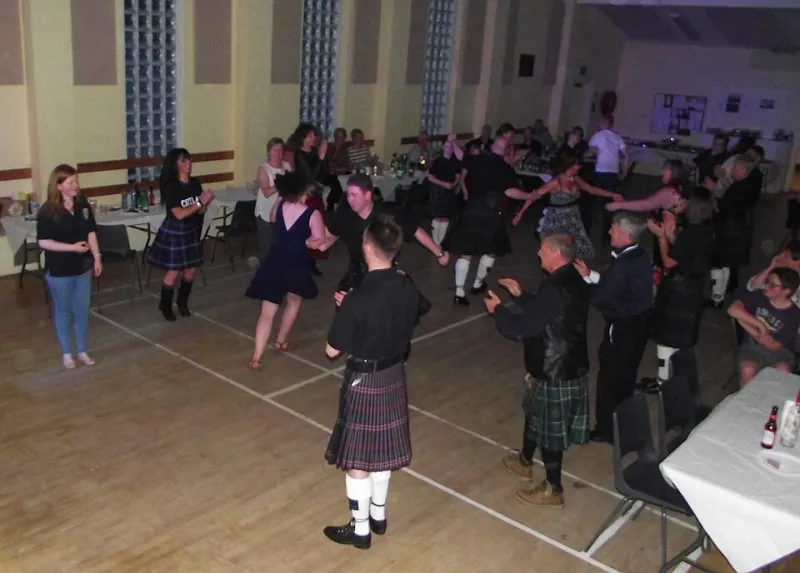
Photo: Dave Conner from Inverness, Scotland, CC BY 2.0, via Wikimedia Commons
The first ten minutes are the hardest
There is a moment, just after the doors open, when the hall at Stretton Social Club looks like a school gymnasium waiting for a decision. Chairs are still stacked at the sides. The band is tuning something that sounds like a cat with opinions. A tea urn ticks quietly in the corner. Then the caller picks up the microphone, says hello, and the room changes shape.
That is the small miracle of the Stretton ceilidh. It does not ask you to arrive as a dancer. It asks you to arrive, full stop.
A caller who talks you through it
If you have never been to a ceilidh, the word can sound like something you need a qualification for. In practice, it is a room full of people walking in circles, holding hands, occasionally going the wrong way, and laughing about it. The caller stands at the front and breaks each dance down before the band starts. They explain the figures — rights and lefts, dos-y-dos, strips of the willow — in plain English, then repeat them while you are moving. If you forget, you can look at the person next to you. If they forget, they look at the caller. Nobody minds.
This is not a performance. There is no audience, unless you count the stack of chairs. The caller is not looking for polish; they are looking for participation. 'First-timers, put your hand up,' they say, and half the room does. 'Good. You are in the right place.'
Why the floor does the social work
The ceilidh floor is one of the most inclusive rooms in town because it gives everyone the same job: keep moving, keep roughly in time, be kind to the person beside you. Age matters less when you are linking arms with someone who has been coming for twenty years and someone who arrived ten minutes ago. Ability matters less when the caller offers a seated version of a figure or a slower walk-through. Shyness matters less when the alternative is standing at the edge while a circle of strangers waves you in.
You do not need to bring a partner. You do not need to dress up. You do not need to know the difference between a reel and a jig. You need comfortable shoes and a willingness to be slightly rubbish for the first ten minutes. That is the entry fee, and it is payable by everyone.
The sound of a room joining in
The band is live — fiddle, accordion, maybe a piano or a guitar — and the music has that good, rough-edged energy that makes a village hall feel like a night out. Between dances, the caller tells a joke or reminds everyone to thank the musicians. The tea break arrives with proper mugs, biscuits, and the low hum of people who have just done something slightly silly together. Regulars check on newcomers. Someone saves a seat for an older neighbour. Someone else admits they have lived in Stretton for years and never been before, and is told, warmly, that they will be back.
That is why the night keeps filling the room. It is not a niche hobby. It is a low-pressure social club with a soundtrack. You can come alone, leave alone, and still spend two hours feeling part of something.
What to expect if you have never been
Arrive a little early for the walk-through. Tell the caller it is your first time — they will keep an eye on you. Wear something you can move in and shoes that will not slide across the floor. Bring a friend if you like, but do not wait for one. Sit out a dance if you need to; nobody will make a thing of it. And when the caller says 'find a partner', remember that the person nearest to you is probably just as unsure as you are.
The bit after the last dance
The last dance usually ends with applause, a few people still going, and someone asking where the chairs go. The floor that felt daunting at half past seven is just a floor again by eleven. But something has shifted. You have held hands with strangers, missed a turn, been corrected gently, and come out the other side. That is the ceilidh's quiet trick. It uses dancing to do the work that conversation sometimes cannot.
So if you have been walking past the club on a Friday night, hearing the fiddle and wondering, this is your invitation. Stand at the edge for a minute if you need to. The caller will see you. The floor will make room.