Chairs, Cables and the Last Cup: The Stretton Volunteers Who Close the Door After Midnight
Photo: Virginia State Parks staff, CC BY 2.0, via Wikimedia Commons
6.15pm: the hall before the hall
The doors are not open yet, but the work has started. A volunteer is dragging a stack of chairs across the floor at Stretton Social Club, trying to get them into rows that look casual rather than military. Someone else is wiping down the tables. The tea urn is already on, ticking away like a small, reassuring engine. In the corner, a sound desk is being uncoiled from a plastic box, and a microphone is being tested with the words 'one, two, is that on?'
This is the part of a club night that nobody photographs. It is also the part that makes the night happen.
The sound desk is somebody's kitchen table
Most people see the stage and the lights. They do not see the volunteer who spent twenty minutes untangling cables, checking batteries, and moving a speaker half an inch because of a hum. They do not see the person who knows which microphone crackles and which lead needs a wiggle. At Stretton, the sound desk is often run by someone who learned on the job, because that is how community clubs work. You do not need a diploma. You need patience, a bit of common sense, and the willingness to ask someone who knows more than you do.
Tea is not a side issue
In a social club, tea is infrastructure. The urn needs filling. The milk needs checking. The biscuits need arranging, and then rearranging because someone has taken the good ones. The cups need washing, or at least stacking somewhere sensible. It sounds small, but watch what happens when the tea runs out. The room notices. A good tea volunteer is not just pouring drinks; they are giving people a reason to stand still and talk to someone they have never met.
The bit nobody claps for
During the night, the work is invisible by design. Someone checks the toilets. Someone tops up the loo roll. Someone sells raffle tickets, collects glasses, and keeps an eye on the door. Someone notices that an older visitor is looking tired and finds them a chair. None of this is on the programme, and none of it gets applause. It is the quiet labour of a club that wants people to feel looked after without making a fuss.
After the last song
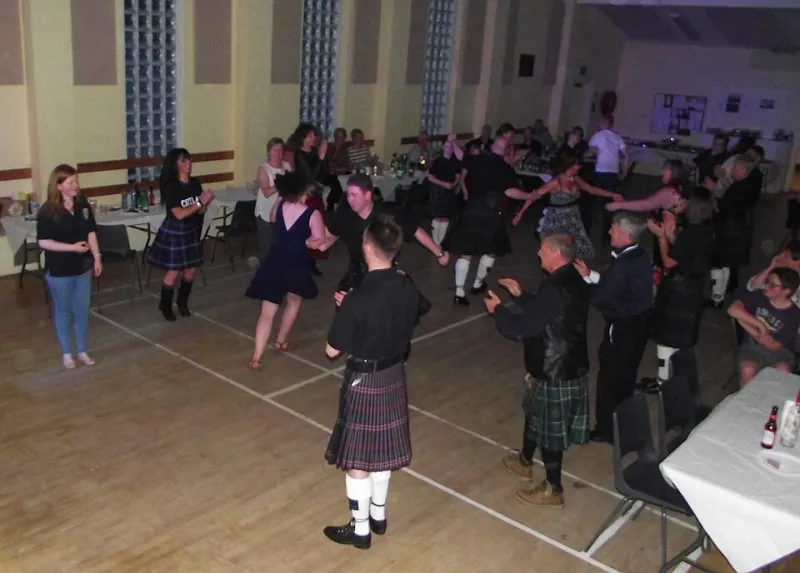
The last song ends. The lights come up. Most people drift towards the door, saying their goodbyes, pulling on coats, checking phones. The volunteers stay. Chairs are stacked. Tables are wiped. The floor is swept. Bins are emptied. Someone walks around the hall switching off plugs, checking windows, and locking the fire door. The last volunteer out might be there forty minutes after the music has stopped, carrying a box of cables to the car and setting the alarm.
Why people keep coming back
Ask the volunteers why they do it and you will get practical answers. 'It gets me out.' 'I like the people.' 'I only do one night a month.' 'I started because someone asked me, and I never stopped.' None of them will tell you they are the reason the club works, but they are. A local club runs on small kindnesses: a chair moved, a kettle boiled, a door unlocked, a lift home offered. You do not have to commit to a committee or a rota that eats your weekends. You can try one shift. You can make tea for an hour. You can help stack chairs and then go home. There is no pressure, and there is always someone who will show you where things go.
The last light
When the hall goes dark, the night is over for everyone else. For the volunteers, it is the end of a job well done. If you have ever wondered how a club keeps going, this is the answer: people who show up early, stay late, and do the bits nobody sees. If you fancy joining them, ask at the bar or have a word with someone on the door. You will not be handed a uniform or a lecture. You will probably be handed a cup of tea and a chair to carry. That is how it starts.