The Front Ten: How Stretton Fills a Room Before the First Chord
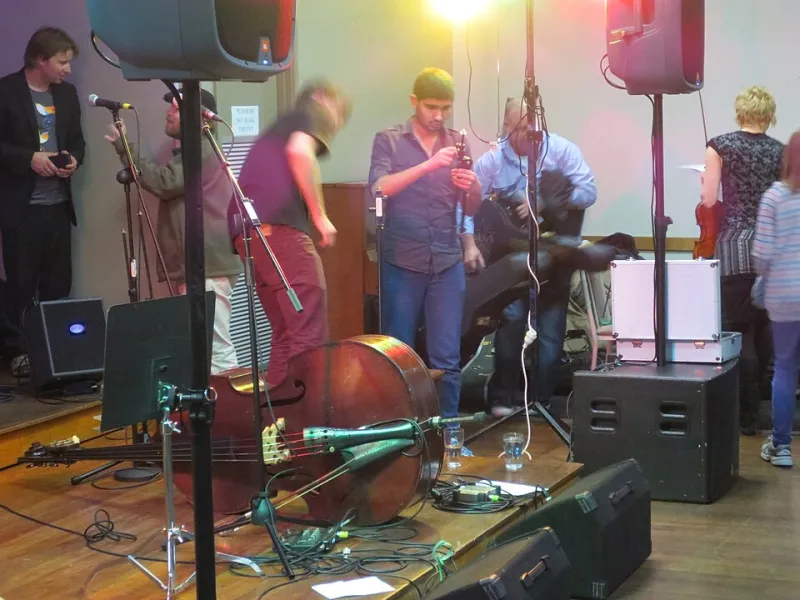
Photo: Johnscotaus, CC BY-SA 4.0, via Wikimedia Commons
At 5.40pm the room still smells faintly of lemon polish over last night's beer, and Ellis Renshaw is trying to work out where to put a guitar case so that nobody trips over it.
Ellis is 23, from Grappenhall, and tonight's opener. Two EPs, a lot of living-room gigs, one wedding, and a support slot in a room that will hold perhaps ninety people if everyone stands politely. In the corner, the sound engineer is making the same small clicking noises he always makes.
'Check, check, one-two,' says Ellis, and the back of the room says it back, faintly, through the reverb.
Quarter Past Eight and a Chalkboard
By half seven the bar is doing steady business. By twenty past eight, the chalkboard by the door reads: ELLIS RENSHAW 8.30 / THE LONG MILE 9.30, and underneath, in smaller letters: front ten, please.
That's it. That's the whole rule.
For the first ten minutes of whoever's on first, the custom at Stretton Social Club is that people drift from the bar to the front and stay there. No microphone announcement. No volunteer with a clipboard herding anybody. Just a chalked line and a room full of people who have been coming long enough to know what it means.
Where It Came From
It wasn't a committee decision. Four or five years ago, a local singer played a support slot to a front half of the room that was completely empty — everyone was queueing, chatting, catching up on the week. The set was fine. The floor in front of the mic was a sea of empty carpet and a bag someone had left on a chair.
Somebody chalked a note the following month. Then somebody else chalked it again. Now it's simply what happens, in the way that these things become law in a social club without anyone ever passing a motion.
Ten Minutes, Then Whatever You Like
The beauty of it is that it ends. Nobody is asking for your whole evening. Watch the first three songs from down the front, clap properly, then go back to your pint and your conversation and your seat by the radiator. The point isn't to convert the room into a concert hall. The point is to make sure that at 8.30pm, when a person plays the first chord of a song they finished in their bedroom, they're looking at people rather than chairs.
And you can hear the shift when it happens. Half past eight arrives, glasses go down, boots and chairs scrape, the noise of a room rearranging itself. Then the first song starts and the noise stops — not into silence, exactly, but into that particular hush of a place where people have decided to pay attention.
Ellis gets through the first verse looking mostly at the ceiling. Second verse, a bit of the room. By the chorus, the whole front row, and there's a small laugh at the line about the car, which is exactly what a songwriter wants.
What It Gives a Performer
'You can hear yourself think,' Ellis says afterwards, still slightly pink. 'The first gig I did here I didn't know about the front ten and I thought I'd walked into a room that hated me. Then everyone appeared. It's not applause, is it — it's just people being there.'
It's also, quietly, the reason a few local names have come back. People who played a support slot to a polite, engaged front row are far more likely to say yes to the next one, and the one after that, until eventually they're the name above the second line on the chalkboard.
If You Haven't Been Before
It's not a members' ritual and there's no secret handshake. If you're new to the room, here's the whole of it:
- Get your drink before twenty past eight if you can, so you're not at the bar when the chalk time comes round.
- Stand or sit wherever you like, but the front two rows are the ones that matter.
- You don't need to know the songs. Nobody does on a first listen.
- If you need the loo mid-song, that's fine, it's at the back, everyone understands.
- Stay for the headliner or don't, but give the opener their ten minutes.
Posters Don't Fill Rooms
You can print a hundred flyers for a live music night and they'll get you maybe fifteen extra people. What gets you the other seventy-five is a habit everyone already knows without being told.
The front ten isn't on any poster. It's a line of chalk and a room that's worked out that standing in the right place costs nothing and means quite a lot. Worth ten minutes of anybody's Thursday.